Silent Power, Self-Mastery, Leadership and Rising Above Chaos
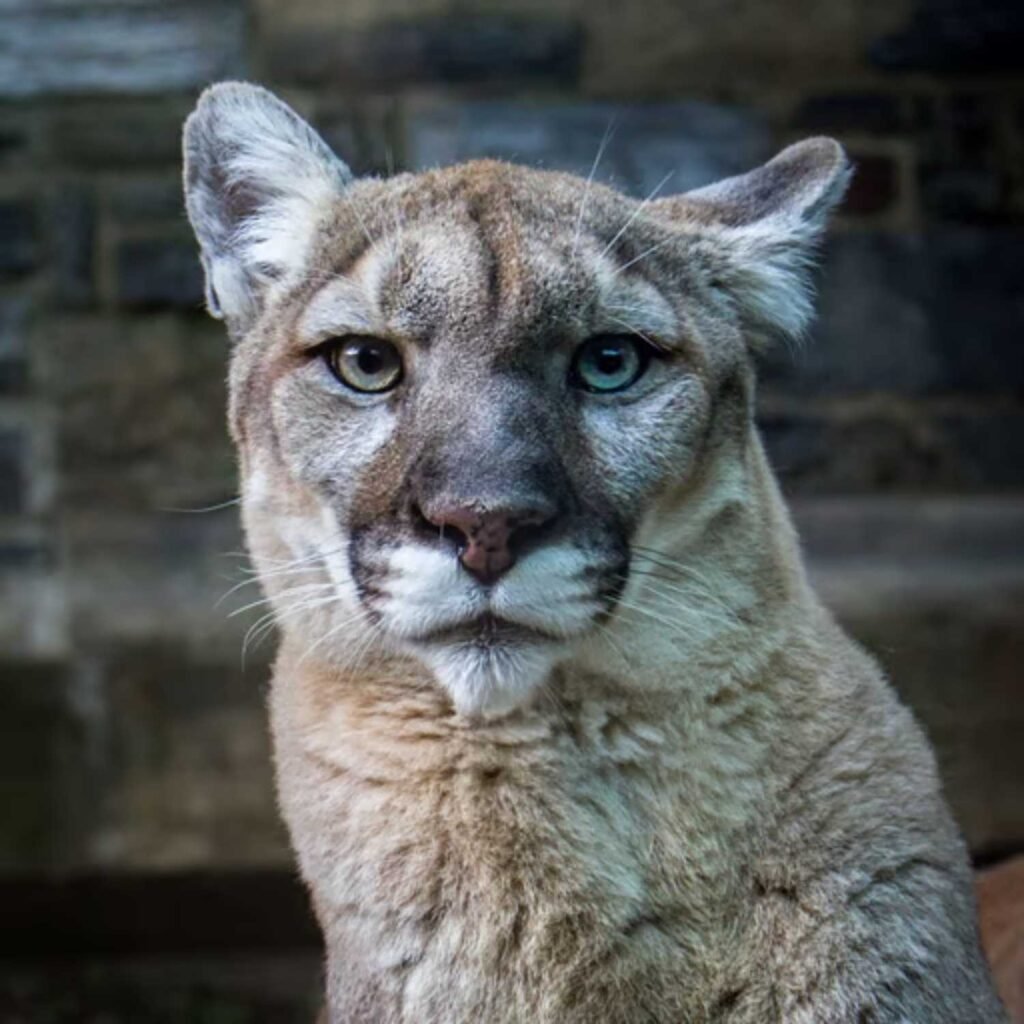
The puma, also known as the cougar, mountain lion, or panther, is one of the most widely distributed and spiritually significant big cats in the Americas. It is an animal of extraordinary range and adaptability, found from the mountains of Patagonia to the forests of British Columbia, from the deserts of the American Southwest to the jungles of South America. This breadth of territory is itself a spiritual teaching: the puma does not belong to any single landscape. It belongs to all of them. It moves through every terrain with equal confidence, claiming its authority not from a fixed position but from the mastery of its own nature.
When the puma spirit animal enters your life, it arrives as one of the most quietly powerful guides in existence. It does not announce itself with a roar or a display. It appears at the edge of your awareness with its characteristic stillness, and what it brings is not drama but an invitation to a deeper and more sovereign relationship with your own power. The puma is the spirit animal of self-mastery, of leading from genuine inner authority, and of the particular kind of courage that comes not from aggression but from complete confidence in who you genuinely are. If the puma has found you through a spirit animal quiz, a significant encounter, a dream, or a lifelong recognition, this guide explores the full spiritual meaning and wisdom that this extraordinary animal carries.
Your spirit animal reveals how you think, feel, and move through the world.
The spiritual meaning of the puma centers on a quality that is difficult to name but immediately recognizable in those who carry it: the authority of someone who has genuinely done the work of knowing themselves. The puma is not the loudest or most dramatic animal in its ecosystem. It is not the largest. What it is, is the most completely itself. It does not perform, it does not posture, it does not need an audience. It simply exists in the full expression of its own nature, and that completeness produces a presence that every other creature in its range feels and responds to.
The mountain lion spiritual meaning draws heavily on the puma’s habit of climbing to high vantage points before acting. The puma surveys its territory from above before descending into it. Spiritually, this translates into one of the most valuable practices available: the habit of rising above the immediate chaos of a situation to see it from a genuinely elevated perspective before deciding how to engage with it. When the puma spirit animal is active in your life, it is frequently asking you to stop reacting from ground level and to climb, metaphorically, until you can see the whole landscape before you make your move.
The puma is also understood in several Indigenous and shamanic traditions as a guardian spirit with the ability to work between worlds: to move through the boundary between ordinary reality and the spirit world, to clear negative energy and dark spiritual influences, and to help those who have passed and remain earthbound to find their way into the light. This dimension of puma spiritual meaning places it among the most powerful of all protective spirit animals, a warrior of the spiritual realm as well as the physical one.
Across many Native American and South American Indigenous traditions, the puma, mountain lion, and cougar occupy positions of exceptional spiritual significance. For the Inca Empire, the puma was one of the three sacred animals representing the three realms of existence: the puma represented the middle world, the world of the living, the realm of present experience and earthly power. The city of Cusco, the capital of the Inca Empire, was designed in the shape of a puma, with its head pointing north toward the sacred valley. The puma was understood as the guardian of earthly sovereignty, the animal whose power made righteous human civilization possible.
For many Pueblo nations of the American Southwest, the mountain lion is the guardian of the North direction and is associated with hunting medicine, with the courage to face difficult challenges, and with the leadership qualities of the war chief. Mountain lion fetishes and carvings are among the most sacred objects in Pueblo ceremonial life, placed to guard the household, the community, and the individual from harm. The mountain lion power animal in these traditions is called upon specifically for protection in dangerous circumstances and for the courage to take necessary action when withdrawal is not an option.
In many Andean and Amazonian Indigenous traditions, the puma is a teacher of the balance between gentleness and power. The puma does not hunt for sport or display. It hunts with the precision and minimal force required by the situation, and it stops when it has enough. This quality of restraint combined with complete capability is understood as the model for genuine leadership: not the use of maximum force available, but the application of exactly the right force at exactly the right moment, and no more.
In Mesoamerican cultures including the Aztec and Maya, the big cats, including the puma and jaguar, were closely associated with the night sun, with the underworld, and with the divine warrior class whose role was to maintain cosmic order through sacrifice and combat. The jaguar warrior society was the most elite military organization in Aztec culture, and while the jaguar was more directly associated with this tradition, the puma shared in this broader cultural understanding of the great cat as a divine warrior whose power protected the sacred order of the cosmos.
In contemporary shamanic and spirit animal traditions across North and South America, the cougar spirit animal is consistently understood as one of the most powerful teachers of personal mastery available. The cougar does not teach aggression. It teaches completeness: the particular quality of someone who has come to terms with all dimensions of their own nature, including the difficult ones, and who moves through the world from that wholeness with a confidence that does not require external validation. Working with the cougar spirit animal in these traditions is understood as a calling to the ongoing, never-finished work of becoming more fully oneself.
As a power animal, the puma and mountain lion are most effectively called upon in a specific set of circumstances that all share a common need: the need for genuine, grounded, unperformative personal authority. Call on the mountain lion power animal when you are being called to lead and need the quality of leadership that comes from inner completeness rather than positional authority; when you are facing a threat to your safety or your sacred commitments and need the courage and precision to respond effectively without unnecessary aggression; when you are struggling to maintain your own center in the face of other people’s drama, chaos, or attempt to destabilize you; or when you are working on the ongoing project of self-mastery and need the puma’s particular combination of fierce commitment and patient, unhurried dedication to the work.
The mountain lion power animal is also particularly valuable when you need to regain the elevated perspective: when you are so deep in the day-to-day details of a difficult situation that you can no longer see the whole picture. Call on the puma to help you climb above the noise, to restore the wider view, and to act from that higher clarity rather than from the confusion of ground-level reactivity.
Those who carry the puma as their totem animal are among the most quietly formidable people you will encounter. They do not announce their power. They do not need to. There is something in their presence, a quality of settled, unhurried self-possession, that communicates their nature to anyone paying attention without a word being said. Puma-spirited people are natural leaders who lead not through demand or display but through the simple, undeniable fact of being completely themselves in every situation.
The puma personality is characterized by a fierce independence that is not hostile to connection but does not depend on it for its sense of self. These are people who are genuinely comfortable alone, who use solitude productively for the deep self-reflection that keeps them calibrated, and who enter their relationships and communities from a place of genuine fullness rather than unmet need. They are deeply perceptive, often picking up on dynamics and motivations that others miss entirely, and they tend to act on their perceptions with precision rather than broadcasting them unnecessarily.
The shadow dimension of the puma totem is the tendency toward isolation when the demands of relationship and community feel too chaotic or insufficiently worthy of the puma’s particular quality of engagement. The puma that withdraws too completely into its solitary territory loses the opportunity to contribute its gifts to the world that needs them. Those with the puma as their spirit animal must resist the temptation to require perfection from the world before they will engage with it fully, and must practice the puma’s balance of independence and genuine investment in the territory and the beings within it.
The puma, mountain lion, and cougar are all names for the same magnificent animal, Puma concolor, the most widely distributed wild land mammal in the Western Hemisphere after humans. The variation in names reflects the different regions and cultures that have encountered this animal: it is called mountain lion in North America, puma in South America, cougar across much of the West, and panther in Florida and the Southeast. Understanding this is important in the spirit animal context because the puma symbolism, mountain lion spiritual meaning, and cougar spirit meaning all refer to the same essential qualities, shaped by the same remarkable creature.
The name mountain lion specifically emphasizes the puma’s association with high places, with the elevated perspective, and with the particular sovereignty that comes from occupying the heights above ordinary terrain. The name puma, from the Quechua language of the Inca, connects this animal directly to its deepest cultural and spiritual roots in South America, where it was a sacred figure of cosmic significance. The name cougar, from a Tupi word meaning false deer or similar animal, reflects the European encounter with a creature unlike anything in the Old World tradition, whose power and grace defied easy categorization.
Dreams involving pumas, mountain lions, or cougars are significant and often arrive at moments of genuine personal transition. The most common and most positive puma dream is the encounter with a puma that regards you with its characteristic calm, golden-eyed gaze. This dream typically signals that your own power and self-mastery are either present in their fullness or being called toward fuller expression. The puma looking at you in a dream is often understood as your own highest self regarding you with clear-eyed recognition: it sees who you genuinely are, and it is asking whether you see it too.
A puma that follows you in a dream without threatening you is often interpreted as your own personal power in pursuit: aspects of your genuine strength and authority that you have not yet fully claimed, following along behind you and waiting for you to turn and acknowledge them. A puma that is hunting in your dream typically signals a period of focused pursuit toward an important goal: the preparation is complete, the patience has been exercised, and the time to commit completely to your purpose has arrived.
A puma that attacks in a dream is most commonly understood not as an external threat but as a confrontation with your own suppressed power or with a situation in your waking life that has been demanding your full engagement and has been met with avoidance instead. The attacking puma in a dream is rarely malevolent; it is usually urgent, and the invitation is to stop running and to stand fully in whatever the situation requires of you.
The puma’s energy is most directly accessible through practices that cultivate genuine self-knowledge and inner authority: not the performance of confidence, but the quiet, steady work of actually coming to know yourself more completely. Regular time in solitude, in meditation, in honest reflection on what you genuinely value and where your current life aligns or fails to align with those values, is the most direct path to the puma’s particular wisdom. The puma is not drawn to those who are performing their power. It is drawn to those who are genuinely developing it.
Spend time in high, open places: mountain peaks, ridgelines, cliff edges, anywhere that offers a genuinely elevated view of a wide landscape. The puma’s characteristic vantage point is a physical practice as much as a metaphorical one, and cultivating the habit of literally and figuratively seeking the high ground before acting is one of the most effective ways to align with this spirit animal’s guidance. Practice stealth in the best sense: moving through your environment with full awareness and minimal unnecessary noise, observing before speaking, understanding before acting, conserving your energy for what genuinely matters.
You already know what you are. The question is whether you are willing to live it completely. Not the curated version, not the version that is strategic about which parts to show and which parts to keep hidden. All of it. The strength and the gentleness. The solitude and the connection. The patience and the ferocity when ferocity is what the moment requires. Climb above the noise. See the whole landscape before you decide where to move. And when you move, do not hesitate. You were built for this terrain. You have always been built for this terrain.