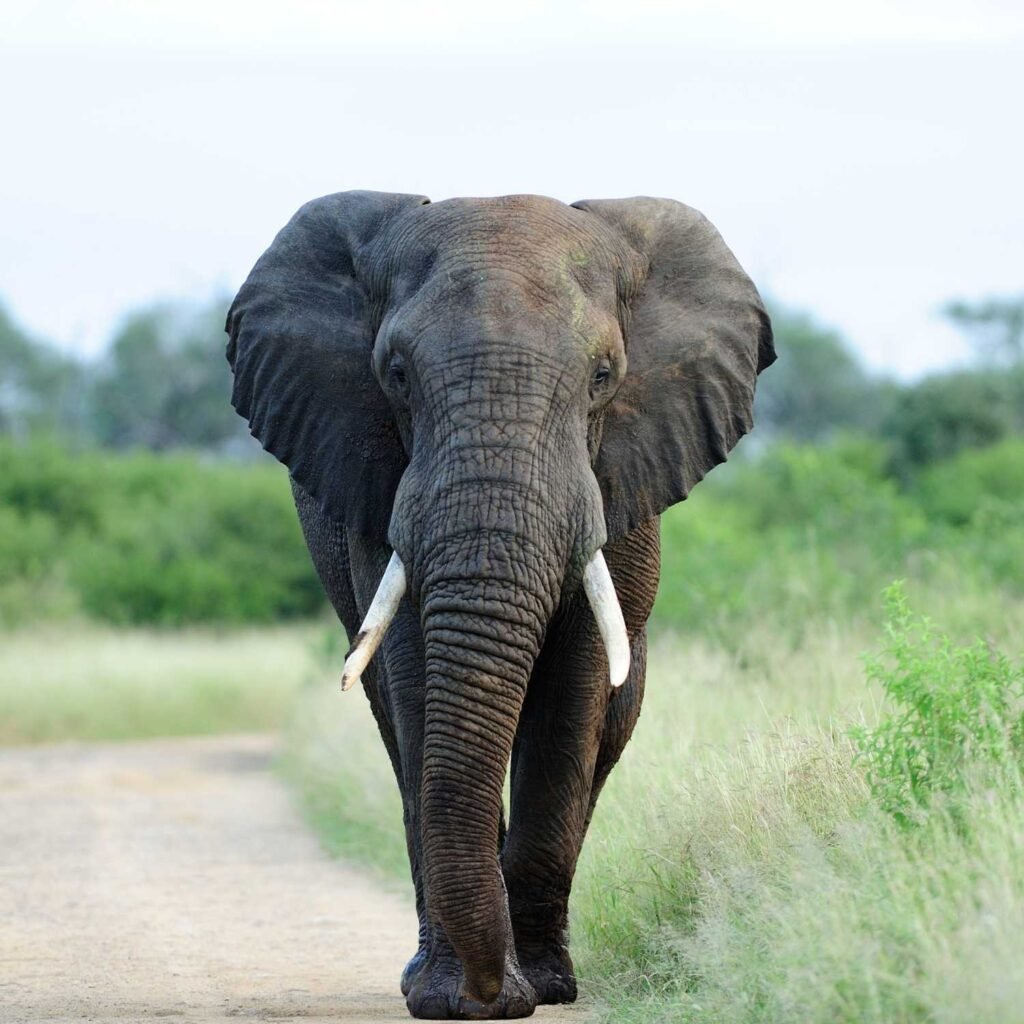
Of all the creatures on earth, few carry the weight of spiritual meaning quite as the elephant does. Revered across India, Africa, Southeast Asia, and ancient civilizations from Mesopotamia to Greece, the elephant spirit animal stands as one of the most universally beloved and deeply meaningful totems in existence. It represents the qualities that endure: wisdom accumulated over a long life, the fierce love that holds families together, and the quiet power of a being so grounded in its own nature that it has nothing to prove.
When the elephant spirit animal enters your life, it is typically a call to trust what you have accumulated, to honor your community, and to move through your challenges with the patience and steady force of the largest land animal on earth. If you carry the elephant as your totem, you are someone who leads through depth, loyalty, and the long memory of what genuinely matters.
Your spirit animal reveals how you think, feel, and move through the world.
The spiritual meaning of the elephant is rooted in several complementary dimensions that together form a complete teaching about how to live with genuine wisdom and power. The elephant is not a creature of speed or stealth. It moves deliberately, aware of its weight, carving a path that others follow. Spiritually, this translates into the invitation to trust the depth of your own experience rather than rushing toward the next thing, and to recognize that your greatest contributions to the world often come from who you are rather than how fast you move.
The elephant’s extraordinary memory is one of its most spiritually significant qualities. Elephants remember individual humans, other elephants, and significant locations across decades. They grieve their dead, returning to the bones of fallen family members and touching them with apparent tenderness. This memory is understood spiritually as the ability to carry the wisdom of the past into the present without being imprisoned by it, to honor what has come before while remaining fully alive to what is happening now. The elephant spirit animal meaning, at its deepest level, is the teaching that memory used with love is one of the most powerful forces available to a human being.
Nowhere on earth is the elephant more deeply woven into spiritual life than in India. The elephant meaning in India is vast and multi-layered, touching every dimension of religious and daily life. The most immediate expression of this is Ganesha, the elephant-headed god who is one of the most widely worshipped deities in the Hindu pantheon. Ganesha is the remover of obstacles, the lord of beginnings, the patron of wisdom, writing, and new ventures. Before any major undertaking, a Hindu household will invoke Ganesha first, seeking his blessing to clear the path ahead. The elephant symbolism in India through Ganesha represents the integration of earthly power and divine wisdom, the capacity to overcome whatever stands in the way of a worthy goal.
Beyond Ganesha, elephants hold sacred significance in Hindu cosmology through Airavata, the celestial white elephant who serves as the mount of Indra, king of the gods. Airavata represents the cosmic cloud from which rain falls, connecting the elephant to the life-giving waters of the monsoon and to the generative abundance of the natural world. The elephant in India is also a symbol of royal authority: no coronation, no grand procession, no major temple festival is complete without the presence of a decorated elephant carrying the divine image or the sovereign.
What does the elephant symbolize in India in practical everyday terms? It is a sign of good fortune, of the blessings of the divine, of prosperity arriving in your life. An elephant figurine placed near the entrance of a home with its trunk raised is considered one of the most powerful good luck symbols in Hindu and Buddhist households alike, believed to channel positive energy and abundance into the space.
In Buddhist tradition, the white elephant carries some of the most sacred symbolism in the entire religion. The night before the birth of the Buddha, his mother Queen Maya dreamed of a white elephant entering her right side, bearing a lotus flower in its trunk. This dream was interpreted as a vision of the exceptional spiritual being who had taken incarnation in her womb. The white elephant in Buddhist symbolism therefore represents the arrival of the sacred, spiritual purity, and the compassionate wisdom of the awakened mind.
More broadly, the elephant in Buddhism represents mental strength and the quality of mind required for genuine spiritual practice. A well-trained elephant walks steadily through any terrain without being thrown by distraction, reflecting the calm, focused, unshakeable quality of a mind that has been developed through meditation. The wild elephant, by contrast, represents the untrained mind that is pulled in every direction by impulse and desire. Elephant symbolism in Buddhist teachings is therefore a teaching about the practice of mind itself: becoming like the elephant that walks without being startled, that carries its burden without complaint, that moves through the world with the dignity of its own complete nature.
Across Africa, the elephant is regarded as the greatest of all animals, and its spiritual significance is as varied and rich as the continent itself. In many African traditions, elephants are understood as spirit animals of the ancestors, beings whose wisdom and long lives give them access to knowledge that younger creatures cannot possess. The elephant’s size, its age, and its evident emotional intelligence have always commanded deep human respect.
In many West African traditions, the elephant is the symbol of the chief or king, representing the authority that comes not from aggression but from age, experience, and the weight of accumulated wisdom. In East African traditions, the elephant is associated with rain, with the great rains that the elephant’s memory guides it toward, and with the life-giving abundance that follows water across the savanna. African elephant symbolism consistently returns to the themes of wisdom, protection of the community, the long view, and the kind of leadership that earns its place through years of faithful service.
The elephant appears in the mythology and spiritual traditions of virtually every culture that has encountered it. In ancient Mesopotamia, the elephant was a symbol of power and exotic wonder, featured in royal art as evidence of the king’s dominion over the far corners of the world. In ancient Rome, elephants captured after the Punic Wars became symbols of military triumph and the extension of imperial power. In Chinese tradition, the elephant is a symbol of good luck, wisdom, and prudence, and is depicted carrying the vase of plenty on its back as a sign of good fortune and abundance arriving.
In the cosmological traditions of South and Southeast Asia, the world itself rests on the backs of great elephants, who in turn stand on the back of a great turtle. The elephant in this mythology is not merely large, it is literally foundational: without the elephant, the world has no ground to stand on. This mythological role captures something essential about what elephants symbolize spiritually: they are beings whose presence makes stability possible for everyone around them.
Those who carry the elephant as their totem animal share a recognizable set of qualities that, taken together, form one of the most genuinely admirable personality profiles in the spirit animal world. Elephant-spirited people are typically people of exceptional loyalty and long memory, who invest deeply in their relationships and do not abandon those they love when circumstances become difficult. They are patient in a way that is not passive but purposeful, willing to wait for the right moment rather than acting impulsively, and possessed of a quiet inner strength that does not need external recognition to remain stable.
The elephant personality traits most commonly observed in those with this totem include a strong family orientation, a natural gift for nurturing and protecting the people in their care, a deep respect for the wisdom of elders and for the knowledge accumulated through experience, and a social intelligence that reads group dynamics with remarkable accuracy. Elephant people are often the ones others turn to in a crisis, not because they are the most dramatic or energetic presence but because they are the most reliable. They carry their responsibilities with the steadiness of a being designed for exactly that purpose.
The shadow dimensions of the elephant totem are worth acknowledging: the elephant’s great memory can, when unexamined, become the inability to forgive or to release old grievances. The elephant’s protectiveness can tip into controlling behavior. And the elephant’s deep rootedness can, at its shadow edge, become resistance to necessary change. Elephant-spirited people grow most fully when they bring the same compassion to themselves and to others’ failures that they would bring to a vulnerable young elephant learning to navigate the world.
As a power animal, the elephant is most effectively called upon when you need steadiness in the face of overwhelming pressure, when you need to remember what truly matters after a period of confusion or distraction, when you are carrying a heavy responsibility and need the strength to continue without collapsing, or when you are called to lead a community or family through a difficult transition and need the elephant’s particular combination of wisdom, patience, and unwavering care.
The elephant power animal is also particularly valuable when you are beginning a new chapter and need the obstacles cleared from your path. In this dimension, the elephant’s connection to Ganesha is most directly relevant: call on the spirit of the elephant when you are launching something important and need both the courage to begin and the wisdom to navigate what arises. The elephant does not remove obstacles by pretending they do not exist; it removes them by applying the full, unhurried force of its nature to whatever stands in the way. That is the model. That is the teaching.
In contemporary life, encountering an elephant in person is relatively rare and almost always feels significant. Whether you see one at a sanctuary, in the wild, or even through a striking image or dream that arrives at a meaningful moment, the elephant’s appearance in your awareness is understood across traditions as a sign of good fortune, of divine blessing, and of a period of stability and abundance approaching.
If an elephant appears in your waking life with a quality of unmistakable spiritual significance, the most consistent traditional interpretation is that you are being supported by forces larger than yourself, that the path you are on has strong spiritual backing, and that the wisdom and strength required for what lies ahead are already present in you. The elephant does not appear to the unprepared. It appears to those who have done the long work of developing genuine inner resources, and whose time to step fully into the power of those resources has arrived.
Elephant dreams are almost universally positive in their spiritual significance. What does it mean to dream of elephants? Across most traditions, dreaming about elephants is a sign of good luck, of wisdom being offered from the deeper layers of your own psyche, and of strength and stability arriving in your life. The elephant in a dream often appears when the dreamer is facing a situation that requires the elephant’s most essential qualities: patience, steadiness, the long view, and the courage to carry a heavy responsibility without breaking.
A peaceful elephant in your dream, moving through a landscape with its characteristic unhurried dignity, is one of the most favorable dream omens available. It signals that you are aligned with your own deeper wisdom, that your current path has strong support, and that a period of genuine prosperity and stability is either present or approaching.
Dreaming of a herd of elephants typically amplifies this positive meaning, adding the dimension of community and the strength that comes from genuine belonging. If you are in a period of isolation or disconnection, a herd of elephants in a dream is an invitation to seek out or return to the community that nourishes you.
An elephant that is aggressive or charging in a dream is rarer but carries its own specific meaning: it typically represents a situation in your waking life that has been ignored or suppressed for too long and is now demanding your full attention. The elephant in this context is not a threat from outside but an eruption of your own power that has not been honored. The dream is asking you to stop diminishing your own strength and to give the full force of your capabilities to whatever is calling for it.
The significance of elephants in dreams in the Hindu tradition is particularly notable: dreaming of an elephant, especially a white one, is considered an auspicious vision of Ganesha’s blessing, a sign that obstacles are being cleared and that success in new ventures is being supported by divine favor.
The elephant’s energy is most directly accessible through the practice of genuine community: investing in the relationships that matter, showing up for the people you love with full presence rather than managed attention, and allowing yourself to be known deeply by those who deserve that gift. The elephant does not hold itself at a careful distance from its herd. It moves in full contact with those it loves, touching them constantly, communicating through vibration and sound and physical presence. To work with the elephant spirit animal, practice that same quality of full, unhurried contact in your most important relationships.
Spend time in silence and stillness, particularly in natural settings. The elephant’s wisdom is not accessed through speed or activity. It surfaces in the long, quiet accumulation of presence, in the willingness to sit with experience long enough for its real meaning to emerge. When you are facing a significant decision, channel the elephant: do not rush. Gather all relevant information. Trust what your long experience tells you. And when you finally move, commit completely to the direction you have chosen.
You have been accumulating wisdom your entire life. Every difficulty you have moved through, every person you have loved, every loss you have survived and carried forward with grace, all of it lives in you now as a resource more valuable than you have yet fully recognized. You do not need to be faster or louder or more impressive. You need to be more fully what you already are: steady, deep, devoted, and possessed of a strength so genuine that the world does not need to be told about it. It simply feels like it when you arrive.