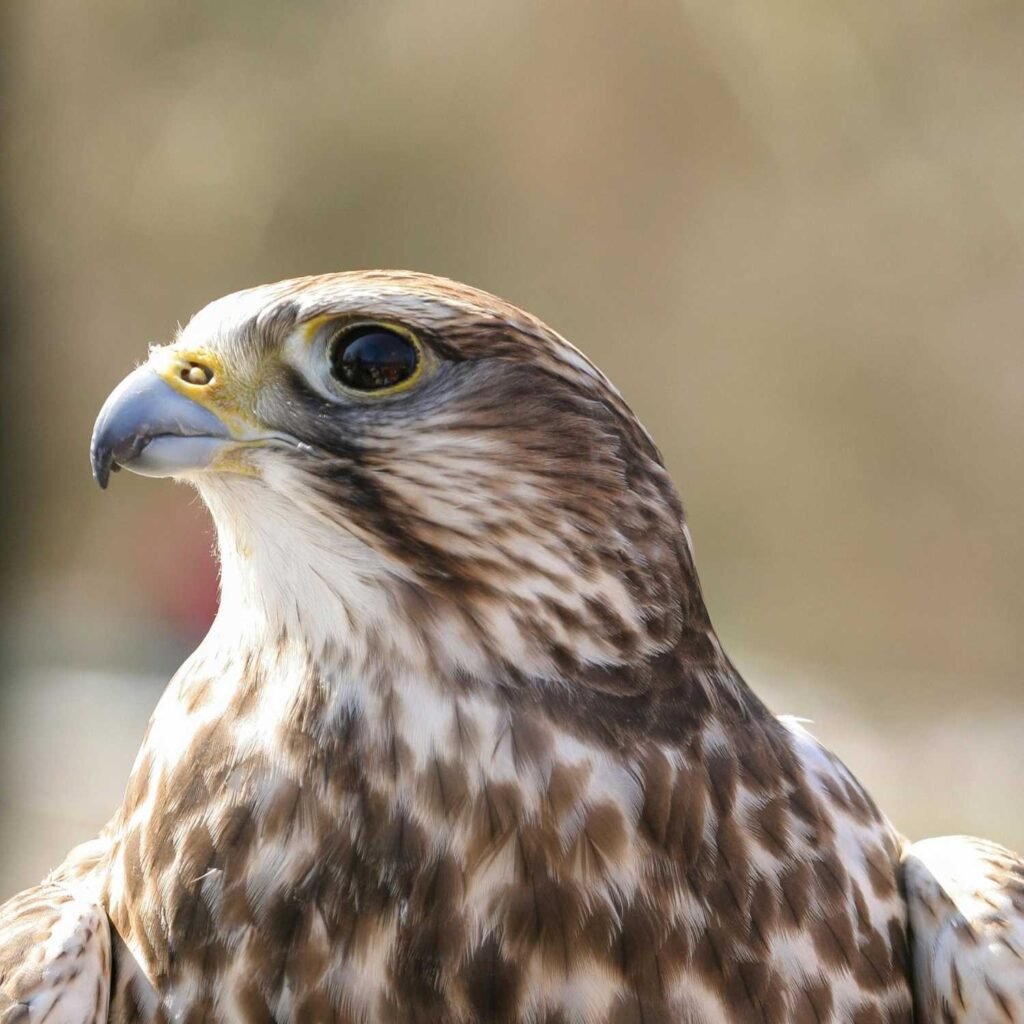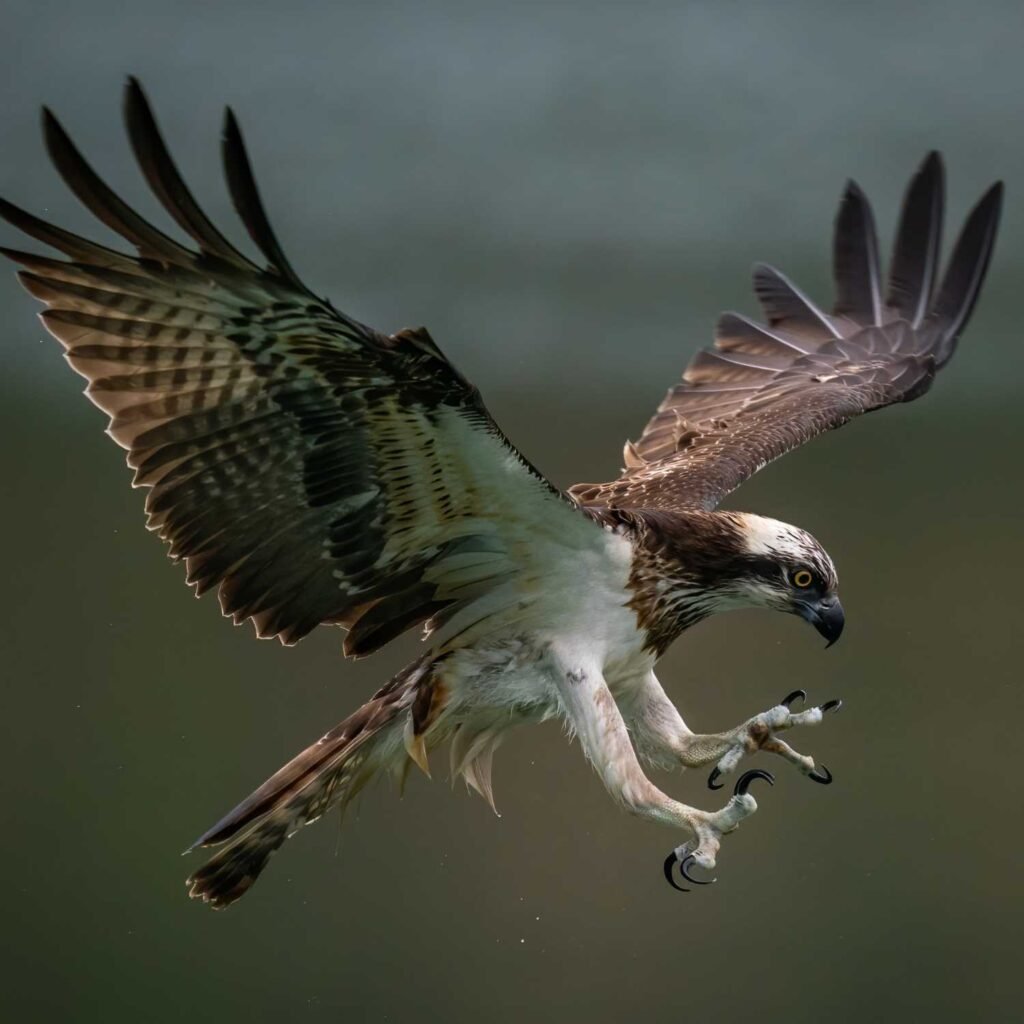
The falcon is the fastest animal on earth. When a peregrine falcon folds its wings and enters its hunting dive, it reaches speeds exceeding 240 miles per hour, becoming something that blurs the boundary between bird and force of nature. Nothing else alive moves like this, and nothing in the spirit animal world quite matches the quality of focused, aerodynamic, absolute commitment to purpose that this speed represents. The falcon does not hedge. It does not hesitate. When it has identified its target, it commits with everything it has, and its success rate is among the highest of any predator on the planet.
When the falcon spirit animal enters your life, it brings this same quality as its central teaching: the invitation to move with clarity, precision, and total commitment toward what you have identified as genuinely worth pursuing. The falcon is not interested in scattered attention or half-hearted effort. It is interested in vision: the ability to see clearly from a great height, to identify exactly what matters, and then to act with the full force of your available speed and skill. If the falcon has found you through a spirit animal quiz, a significant sighting, a dream, or a lifelong sense of kinship with this extraordinary bird, this guide explores the complete spiritual meaning and symbolism of the falcon totem.
Your spirit animal reveals how you think, feel, and move through the world.
The spiritual meaning of the falcon centers on one of the most important and least commonly developed of all human capacities: the ability to see clearly. Not merely the physical ability to observe, but the deeper quality of perception that can cut through confusion, distraction, and wishful thinking to identify what is actually true and what actually matters. The falcon’s extraordinary eyesight, which can spot prey from a mile or more away and track its precise position through a dive that no human eye could follow, is the physical expression of a spiritual faculty: the capacity for genuine clarity.
The falcon’s spiritual message is that clarity is not a passive state that arrives when life becomes simple enough. It is an active discipline, a quality that is developed through practice and maintained through the willingness to see things as they are rather than as we wish they were. The falcon does not make assumptions about where its prey will be. It observes. It reads the actual movement, the actual position, the actual trajectory of what it is tracking, and it adjusts its approach continuously until the moment of contact. Spiritually, this is the model for any important pursuit: stay genuinely attentive to what is actually happening rather than what you expected or hoped to see.
The falcon is also one of the most significant spiritual messengers in world tradition, understood across Egyptian, Native American, Celtic, and Islamic traditions as a being that moves between the human and the divine, carrying information from one realm to the other. When the falcon spirit animal appears in your life, particularly in a way that feels charged with significance, many traditions interpret this as the arrival of divine guidance: something of genuine importance is being communicated, and the falcon’s appearance is the invitation to become quiet enough to receive it.
In ancient Egypt, the falcon was one of the most sacred and extensively venerated animals in the entire religious tradition, and its spiritual significance was inseparable from the concept of divine kingship and cosmic order. The god Horus, one of the most important and most ancient of all Egyptian deities, was depicted as a falcon or as a man with the head of a falcon, and his eyes were understood as the sun and the moon: the falcon’s gaze encompassing the entirety of the visible cosmos. The pharaoh was understood as the earthly embodiment of Horus, and the falcon headdress and falcon imagery that appear throughout Egyptian royal iconography express the understanding that righteous rulership is fundamentally a quality of vision: the ability to see the whole of a situation clearly and to govern from that clarity.
The Eye of Horus, one of the most enduring symbols of ancient Egypt, derives directly from the falcon’s distinctive facial markings, the dark stripe beneath the eye that is characteristic of falcons and hawks. This mark, in the Egyptian spiritual tradition, becomes a symbol of divine sight: the capacity to see with the clarity and the authority of the sacred, to perceive what is genuinely happening beneath the surface of appearances. The falcon meaning in ancient Egypt is ultimately the meaning of righteous, clear-eyed power in service of cosmic order.
In many Native American traditions, the falcon is associated with the qualities of focused intelligence, swift action, and the particular kind of leadership that sees farther than ordinary perception allows. The falcon’s speed and vision made it a natural symbol for the qualities most valued in a warrior and a leader: the ability to perceive the situation clearly and to act on that perception with complete commitment and precision. Falcon feathers in many traditions carried ceremonial significance, and the falcon’s cry was understood as a call to attention, a signal that something important was about to happen or that the moment for decisive action had arrived.
The falcon totem in the medicine wheel traditions of several Plains nations is associated with the element of fire and with the passionate, focused energy that drives purposeful action. The falcon’s message in these traditions is consistently about the relationship between vision and action: genuine vision without action is merely dreaming, and action without genuine vision is merely motion. The falcon brings both together in the single extraordinary arc of its dive, and its teaching is to cultivate the same integration in your own life.
In medieval European culture, falconry was one of the most prestigious pursuits of the nobility, and the falcon’s symbolism in this tradition reflects its role as a bird that embodied the aristocratic virtues of controlled power, trained excellence, and the particular kind of freedom that expresses itself within discipline rather than against it. A trained falcon that returns to the falconer’s glove after its hunt is not a diminished falcon. It is a falcon that has learned to combine its extraordinary natural gifts with the kind of partnership and trust that makes those gifts more effective than they would be alone. The symbolism of the falcon in this tradition speaks to the mature integration of personal power within a larger context of relationship and responsibility.
In Islamic tradition, the falcon is regarded as one of the most spiritually significant of all birds, associated with noble character, spiritual insight, and the capacity to perceive divine guidance in the movements of the world. Falconry has been practiced in the Arabian Peninsula for thousands of years, and the falcon in this context represents the highest qualities of the human spirit: the clarity to perceive truth, the courage to act on it, and the fidelity to maintain it through all the changes and challenges that life brings. The spiritual meaning of the falcon in Islamic tradition is the meaning of genuine nobility of character: not the nobility of birth but the nobility earned through the disciplined development of one’s finest qualities.
The peregrine falcon is the most spiritually significant and widely recognized of all falcon species, and its specific symbolism carries its own distinct richness within the broader family of falcon meaning. The word peregrine itself means wanderer or pilgrim, which is deeply fitting for a bird that undertakes some of the longest migratory journeys of any bird of prey, traveling between continents with a navigation and endurance that continues to astonish researchers.
The peregrine falcon symbolism therefore combines the core falcon qualities of vision, speed, and focused purpose with the additional themes of the pilgrim’s journey: the willingness to travel far from what is familiar in service of what genuinely calls you, to navigate through unfamiliar territory with the same precision and confidence that you bring to your home ground, and to maintain your essential nature across the full range of environments that life moves you through. The peregrine does not become a different bird in different continents. It remains the peregrine, that same precise, focused, extraordinarily capable being, whatever territory it happens to be crossing.
The peregrine falcon’s recovery from the brink of extinction in the twentieth century, after the pesticide DDT devastated populations across the Northern Hemisphere, has added another dimension to its symbolism in contemporary spiritual tradition: the peregrine has become a symbol of resilience and comeback, of the capacity of what is genuinely vital and valuable to survive even the most severe pressures if its essential nature remains intact and if the conditions for its expression are restored. The peregrine’s story is one of genuine hope: proof that what has been nearly destroyed can return, and return with full power.
The falcon and the hawk are frequently confused in both popular culture and in spirit animal discussions, and understanding the difference between them enriches both meanings considerably. In the natural world, falcons and hawks are distinct families of birds with different anatomies, different hunting styles, and different ecological roles. Falcons have long, pointed wings designed for speed, notched beaks for dispatching prey, and they hunt primarily through aerial pursuit, reaching extraordinary speeds in their dives. Hawks have broader, more rounded wings designed for soaring and maneuvering through wooded environments, and they hunt in a wider variety of styles.
Spiritually, these physical differences translate into meaningful distinctions. The hawk spirit animal, which we have covered separately, tends toward the energies of observation, spiritual messaging, and the sustained, wide-angle view of the situation from above. The hawk circles and surveys. The falcon identifies and strikes. Where the hawk’s spiritual teaching is primarily about the quality of elevated perception, the falcon’s spiritual teaching is primarily about what you do with that perception: the translation of clear vision into decisive, committed, precisely timed action. Both are valuable, both work with the theme of vision, but the hawk is the watcher and the falcon is the actor.
When a falcon appears in your life in a way that feels spiritually significant, whether a close encounter, a repeated sighting over a period of days, or an appearance at a moment that seems too perfectly timed to be random, the traditional spiritual interpretation is almost always a call to focused, decisive action. The seeing a falcon meaning is most consistently: you know what needs to be done. You have observed long enough. The time for deliberation has passed. Act now, with everything you have, in the direction your clearest vision has been pointing.
A falcon appearing at a moment of hesitation or self-doubt is often interpreted as a direct spiritual encouragement: your vision is accurate, your perception is sound, and your hesitation is costing you the moment. The falcon does not circle indefinitely gathering more information. At a certain point, it commits. Seeing a falcon when you are at that threshold in your own life is the universe’s way of saying: you are at that point. Commit.
A falcon that appears during a period of creative work, intellectual challenge, or major decision-making is often understood as a sign of spiritual support for the clarity and precision of your perception. Trust what you are seeing. Trust the accuracy of your analysis. The falcon’s vision does not lie to it, and neither does yours, if you are willing to be as honest as the falcon is about what it actually perceives.
Dreams involving falcons are among the most vivid and purposeful of all spirit animal dreams, and they almost always relate to the dreamer’s current relationship with their own clarity of vision and their capacity for decisive action.
A falcon flying freely and confidently in a dream, particularly if it is soaring high or diving with characteristic precision, is typically a powerful affirmation of your own perceptive abilities and a signal that a period of genuine clarity and effective action is either present or approaching. This dream often arrives when you have been doing the work of honest self-examination and are ready to move forward with the confidence that genuine self-knowledge produces.
A falcon that lands on your arm in a dream is one of the most intimate and significant falcon dream images available. This image combines the falcon’s qualities with the theme of partnership and chosen alliance: the falcon that comes to your arm has chosen to work with you, to add its extraordinary vision and speed to your own intentions. This dream typically signals that spiritual support, divine guidance, or a highly aligned partnership is available to you in your waking life, and that you are ready to receive and work with it.
A falcon that is caged or injured in a dream often represents the dreamer’s own perception or clarity of purpose that has been constrained or wounded: by fear, by others’ opinions, by circumstances that have limited the full expression of your natural gifts. This dream is an invitation to identify what is limiting your vision and to take whatever steps are necessary to restore your natural perceptive freedom.
Those who carry the falcon as their totem animal tend to be among the most naturally focused and purposeful people in any group. Falcon spirit animal personality traits include a clarity of perception that can seem almost uncanny to those around them, an ability to identify the essential truth of a situation quickly and accurately, a natural impatience with what they perceive as wasted time or scattered attention, and a capacity for decisive action that others find both impressive and occasionally startling in its speed and completeness.
The falcon totem personality is also characterized by a quality of genuine independence that coexists with the capacity for deep partnership. The falcon does not need the permission or approval of others to perceive what it perceives or to act on that perception. Its authority is internal, based on the accuracy of its own vision and the proven reliability of its own judgment. And yet, as the falconry tradition shows, the falcon can form partnerships of extraordinary quality and mutual benefit with those who have earned its trust. The falcon-spirited person shares this quality: deeply independent, self-reliant, and fully capable of genuine collaboration with those who prove worthy of the partnership.
The shadow dimension of the falcon totem is the tendency toward impatience with those whose perceptive abilities and decision-making speed are slower than the falcon’s own. Not everyone thinks and sees and acts at the falcon’s pace, and the falcon-spirited person must practice the patience and the generosity of slowing down enough to bring others along, to share their vision rather than simply acting on it alone, and to recognize that the collective action of multiple beings, even if slower, often achieves what solo brilliance cannot.
As a power animal, the falcon is most effectively called upon when you need the clarity to cut through confusion and identify exactly what is most important; when you have been gathering information long enough and need the courage and commitment to act decisively on what you already know; when you need the speed and precision to respond to a rapidly changing situation without losing your essential direction; or when you need the falcon’s particular combination of vision and action to move a stalled project, relationship, or life circumstance decisively forward.
Call on the falcon power animal when you are being asked to perform at the highest level of your capabilities, when you need to bring everything you have to a single moment of contact with what matters most. The falcon does not reserve its full capacity for easy circumstances. It brings its full speed and precision to every dive, every moment of genuine engagement. That is the falcon’s gift and its teaching: the willingness to give everything you have to the moment that genuinely calls for it.
The falcon’s energy is most directly accessible through practices that cultivate genuine clarity of perception and decisive engagement with your purpose. Regular meditation focused specifically on clarity rather than relaxation, the practice of honest self-examination about where your attention and energy are actually going versus where they most need to go, and the discipline of eliminating unnecessary distractions from your most important work are all direct paths to the falcon’s guidance.
Spend time in open, elevated landscapes where falcons are likely to fly: clifftops, mountain ridges, open moorlands. Watch actual falcons if you can, in the wild or at falconry demonstrations. The quality of attention that a hunting falcon brings to its task is one of the most instructive things in the natural world, and observing it directly tunes you to the frequency of this spirit animal in a way that description alone cannot. Practice the falcon’s discipline of the dive: when you have identified what genuinely matters, commit completely, without reservation, without looking for a safer alternative. That commitment is the heart of the falcon’s teaching.
You have been watching long enough. You know what you are looking at. You know where it is going and what it is worth and what it will cost you to miss it. The moment for gathering information has passed. This is the moment for the dive. Everything you need for this is already in you: the speed, the precision, the courage, the clarity. The only thing missing is your decision to commit. So make it. Fold your wings. Trust your vision. And move.